
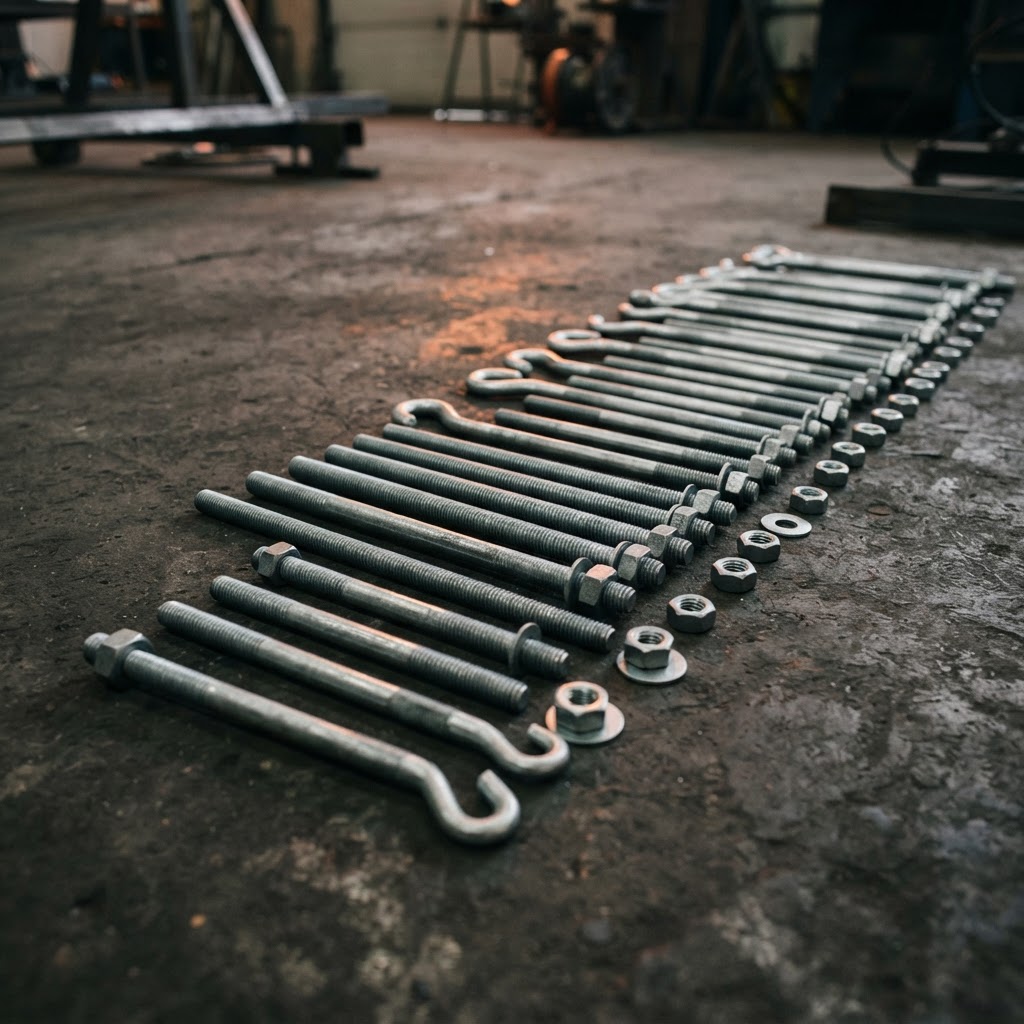
Threaded rods & studs
Threaded Rod or Stud: How to Choose for the Environment?
Threaded rods and studs look alike, but they are not suited to the same applications. The service environment also guides the choice of finish.
5 min
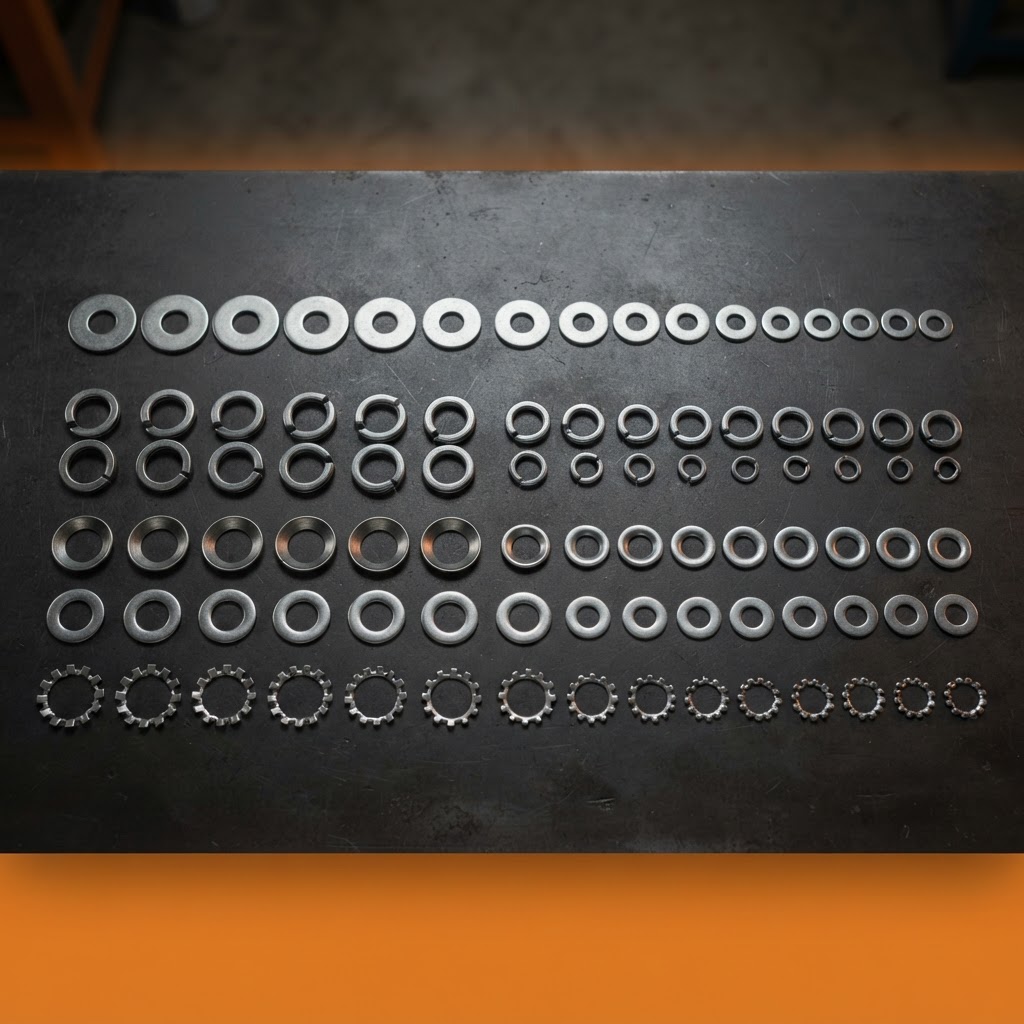
The washer is often the last part added to an order—and the first one forgotten. Yet it plays a direct role in the integrity of a bolted joint: distributing clamping force, protecting the surface, compensating for settling or limiting loosening. Choosing “an M10 washer” is not enough; you also need to know which type.
Depending on its type, a washer can:
No single washer does it all. Start by identifying the function you need.
This is the basic washer: it distributes the load and protects the surface. It is available in normal, narrow or wide series, with or without a chamfer.
Flat washers are specified, among others, by ISO 7089 (normal series), ISO 7090 (chamfered normal series) and ISO 7093 (wide series). Older DIN designations remain common in the trade.
The Grower washer is a split washer with offset ends. It has long been used as a locking washer.
The DIN standard for this washer has been withdrawn, and its effectiveness in preventing loosening in modern joints is debated. The designation is still widely used, particularly in maintenance when replacing a part like for like. For a new joint subject to vibration, other locking solutions may be more suitable: a prevailing-torque nut, threadlocker or purpose-designed locking washers.
The Belleville washer is a conical washer that acts like a spring. It maintains tension in the joint despite settling of the parts, thermal expansion or slight relaxation.
A distinction is made between spring washers proper (DIN 2093) and conical spring washers intended for bolted joints (DIN 6796).
The installation direction and stacking arrangement (in series or in parallel) change how it behaves: follow the manufacturer’s or engineering department’s specifications.
Free quote
A reference to price? Send us your request, we review it.
A star washer has internal or external teeth that slightly bite into the surfaces. It helps limit rotation and, in some cases, ensures electrical contact by cutting through paint or a surface coating.
DIN 6798 specifies several types: external teeth, internal teeth and a conical form for countersunk screws.
| Type | Main function | Typical use |
|---|---|---|
| Flat | Distribute load, protect surface | General use, soft materials |
| Grower | Locking (effectiveness debated) | Like-for-like replacement in maintenance |
| Belleville | Maintain tension | Expansion, settling, electrical contacts |
| Star | Limit rotation, provide electrical contact | Small fastenings, grounding |
The washer should be compatible with the screw and nut: use the same material family and a compatible finish. A zinc-plated washer under a stainless-steel screw in a humid environment creates a risk of galvanic corrosion. For high-strength joints, the washer must also have an appropriate hardness.
Even the right washer can lose its benefit if installed incorrectly. Place the flat washer on the rotating side of the joint (under the nut or the head being tightened), with any chamfer facing the screw head. Install a Belleville washer in the direction specified by the manufacturer, since its behaviour depends on the cone orientation. Finally, avoid stacking different washer types without a good reason: each interface adds a surface that can settle.
Explore our range of industrial washers and the corresponding nuts, bolts and screws.
Choose a washer according to its function, not out of habit. Use a flat washer to distribute load, a Belleville washer to maintain tension, and a star washer to limit rotation or provide electrical contact. Grower washers remain common in maintenance, but joints subject to vibration call for careful consideration of the locking method.
Need washers? Send us your enquiry with the type, diameter and finish.
Free quote
A reference to price? Send us your request, we review it.
Threaded rods and studs look alike, but they are not suited to the same applications. The service environment also guides the choice of finish.
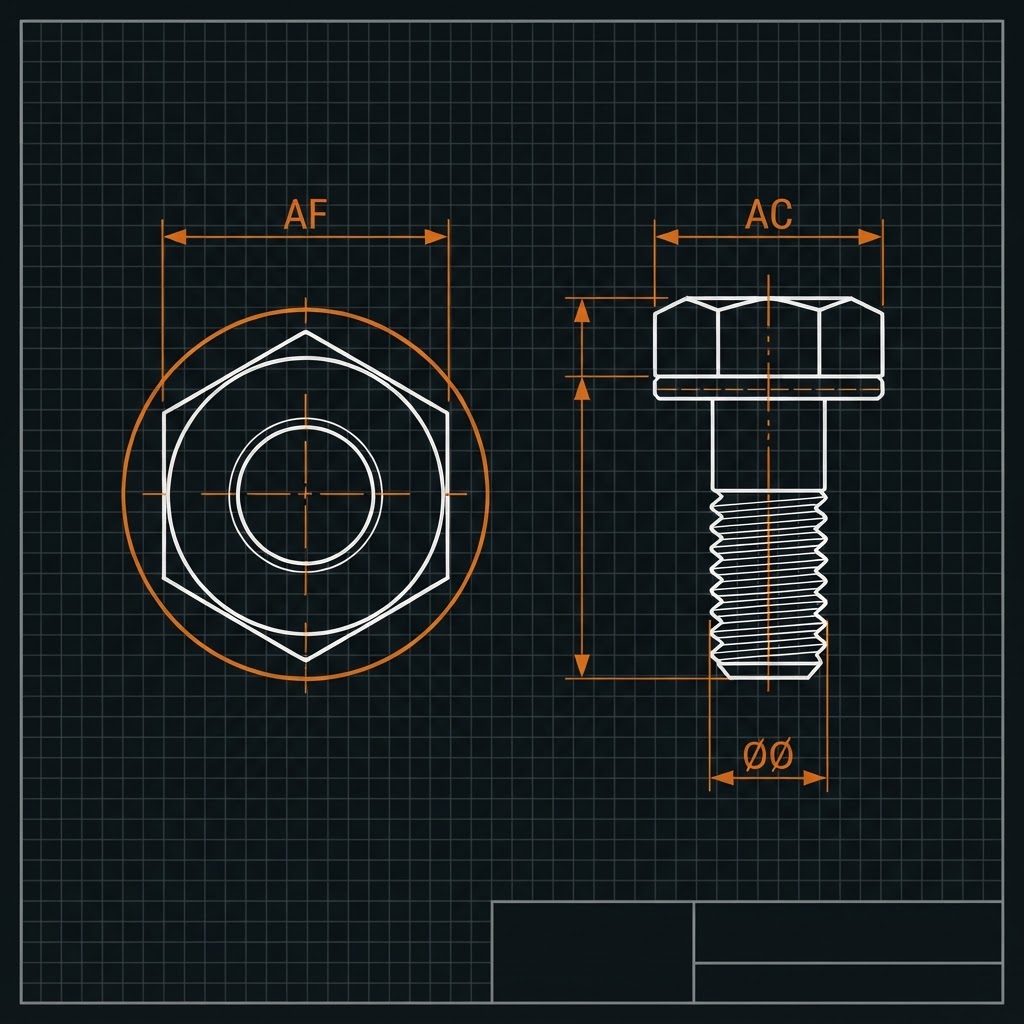
DIN and ISO standards look similar, but they are not always identical. What pitfalls should you know about when replacing one standard with another?
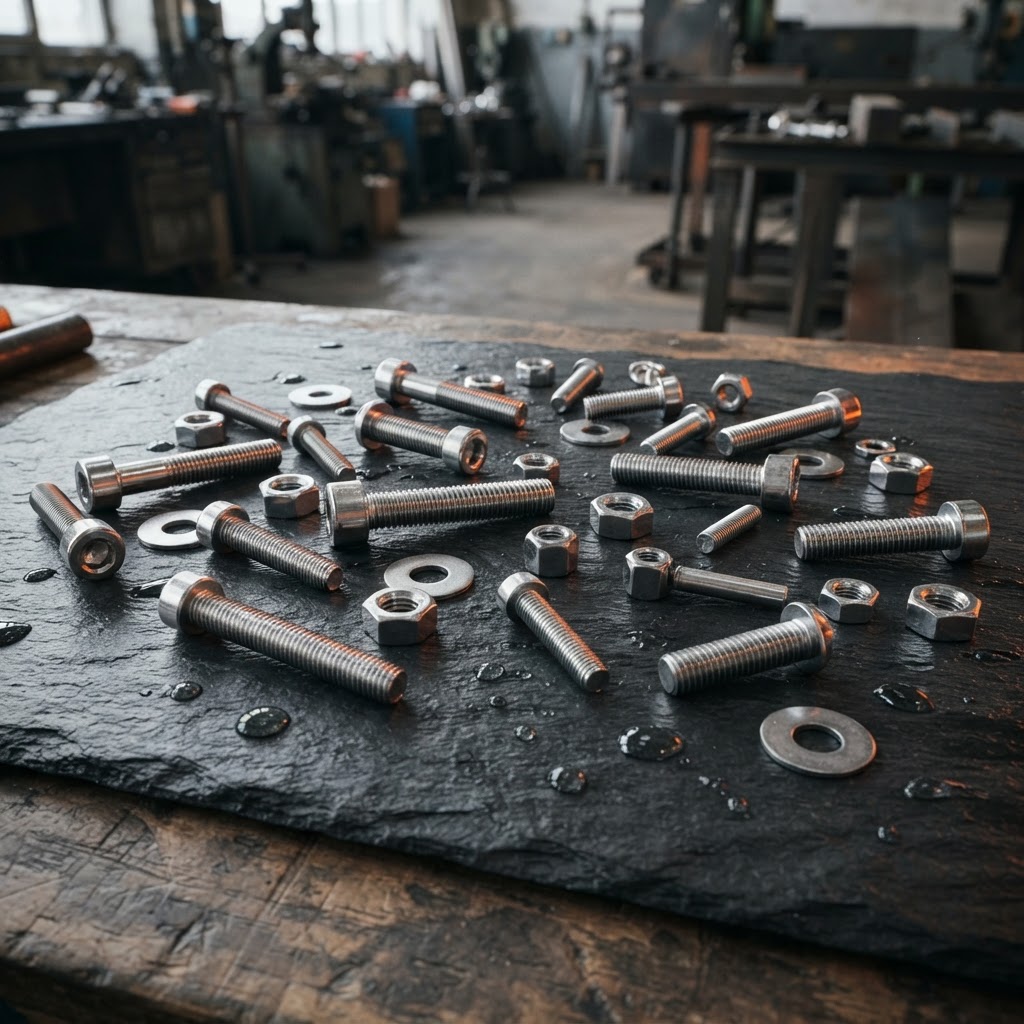
A2 and A4 are the two most common stainless steel grades for fasteners. What’s the difference, and when should you choose one over the other?
On-demand sourcing
Off-catalog reference, drawing, photo or specification sheet: send us your request, our team reviews it and gets back to you.
Optional cookies are used for analytics and advertising. Necessary cookies stay active. Learn more